
Teineplukking redder dyreliv
Rydding av tapte fiskeredskaper på sjøbunnen kan ha en stor positiv effekt på fisk- og skalldyrbestander, men er en fysisk krevende oppgave. Nå har prosjektet «God på bunn» fått støtte av Handelens Miljøfond til innkjøp av redskaper som gjør det lettere å utføre det viktige arbeidet.

Published: 04.July, 2024 Last updated: 05.December, 2025
So-called ghost fishing has gained increasing attention in recent years. When lost fishing gear - such as pots - remains on the seabed, they continue to trap and kill animals like fish, lobsters, and crabs.
– It's a shame that thousands of animals are left waiting to die in the pots, says pot retriever Lars Matthias Køvener as he pulls a cart with equipment down the quay in Mandal.
After checking the map and loading the equipment onto his boat, he is ready for yet another day of retrieving pots.

Passionate Individual
Through the project «God på bunn», Køvener gets paid for each ghost fishing pot he retrieves. Behind the wheel of his boat and zipping through the archipelago, he says that wherever he goes to sea, he usually finds a pot.
Køvener was born and raised in Mandal and has a very special connection to the archipelago here. The Southerner is actually educated as an economist but left office life in favor of a job he is truly passionate about.
Se teineplukkeren i aksjon her:
Important Catch
Once out at sea and anchored with the rope-free Geo-anchor he received support for from the Norwegian Retailers' Environment Fund, he brings out the underwater drone.
– With this "anchor," I can stay completely still, without fearing that the robot drone will get tangled in the anchor line. While most divers have a limitation of 30 meters, the robot drone can reach depths of up to 150 meters, he says.
He controls the drone with a remote control with a screen, which he uses to locate old traps abandoned on the seabed, and shortly thereafter he spots one. The drone is equipped with a claw that can grab the traps. Using a cable, a satisfied Køvener pulls the day's first catch up into the boat.
– A good day is when I bring many traps home with me, he smiles.

Challenging Work
But the underwater drone doesn't always manage the job on its own.
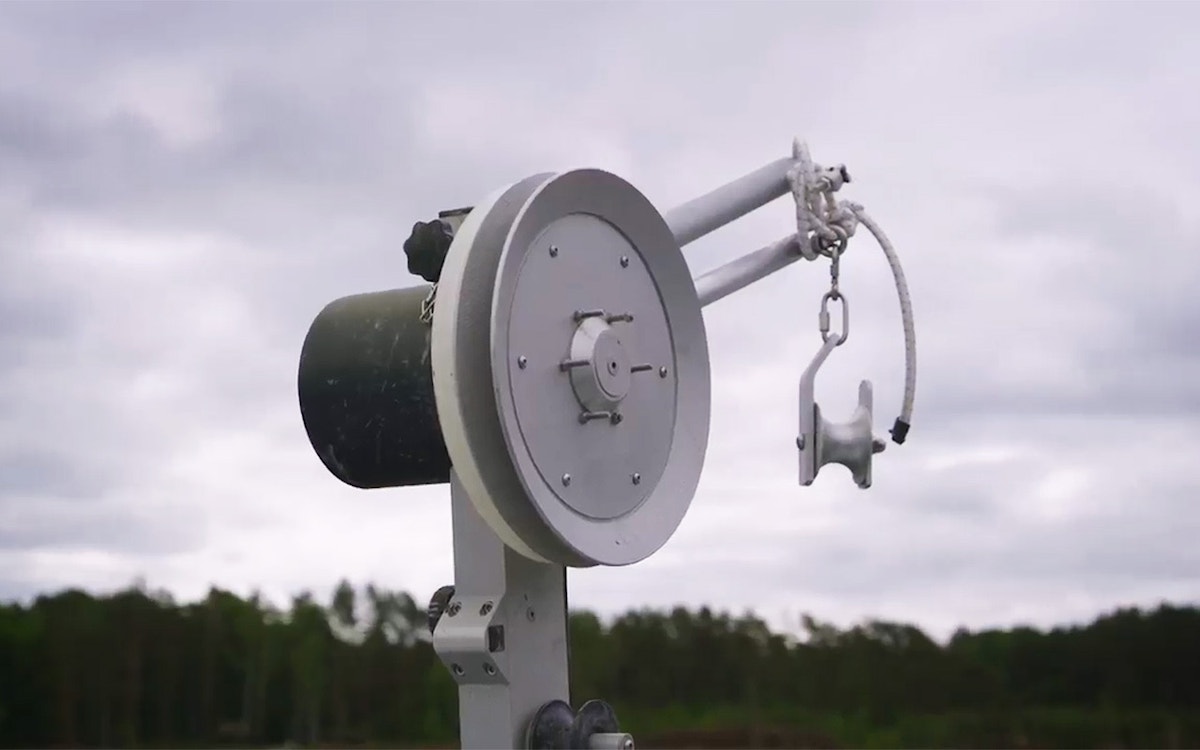
– If there is a trap that is too heavy for the cable, I can attach it to a rope and pull it up with the help of the trap hauler, explains Kløvener, referring to the crane-like tool mounted on the side of the boat.
The trap hauler is one of the tools for which he received support from the Norwegian Retailers' Environment Fund, making it possible to retrieve heavy traps from deep waters - something that opens up enormous possibilities to clean up even more ghost gear. Additionally, it also makes the task less physically demanding.
– So perhaps I can keep going until retirement age without completely wrecking my body, jokes Kløvener.
News



This site is translated by AI