The Hidden Environmental Catastrophe
Lost fishing gear that continues to fish on the sea floor, known as ghost fishing, is serious for the environment. Plastic and metal equipment do not decompose and trap fish and sea creatures for a long time. This creates a vicious cycle where animals are caught and attract new victims.

Published: 22.May, 2025 Last updated: 05.December, 2025
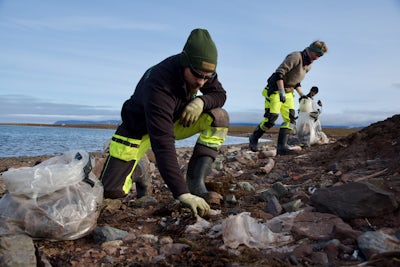
In Norway, the Institute of Marine Research and Green Bay have worked on removing ghost gear along the Norwegian coast since 2019, funded by the Norwegian Retailers' Environment Fund. They have removed more than 10,000 ghost gear, and even more has been removed by diving clubs. In addition to the cleanup efforts, estimates have also been made on how much has been lost - just on the stretch from the Swedish border to Lindesnes, it is estimated that at least 100,000 pots are lost.
The Directorate of Fisheries also makes a tremendous effort to remove ghost gear far out at sea. Every year, they remove thousands of ghost gear and many kilometers of rope. Norway is a pioneer in ghost gear cleanup, and this work has inspired projects in other parts of the world.
International Testing in Thailand
To investigate whether the methods used in Norway can work in other countries, researchers from the Institute of Marine Research and drone pilots from Green Bay traveled to Thailand. In collaboration with SEAFDEC (Southeast Asian Fisheries Development Center), the Thai Department of Fisheries, and the Coastal Directorate, they conducted a three-day expedition aboard a converted fishing boat.
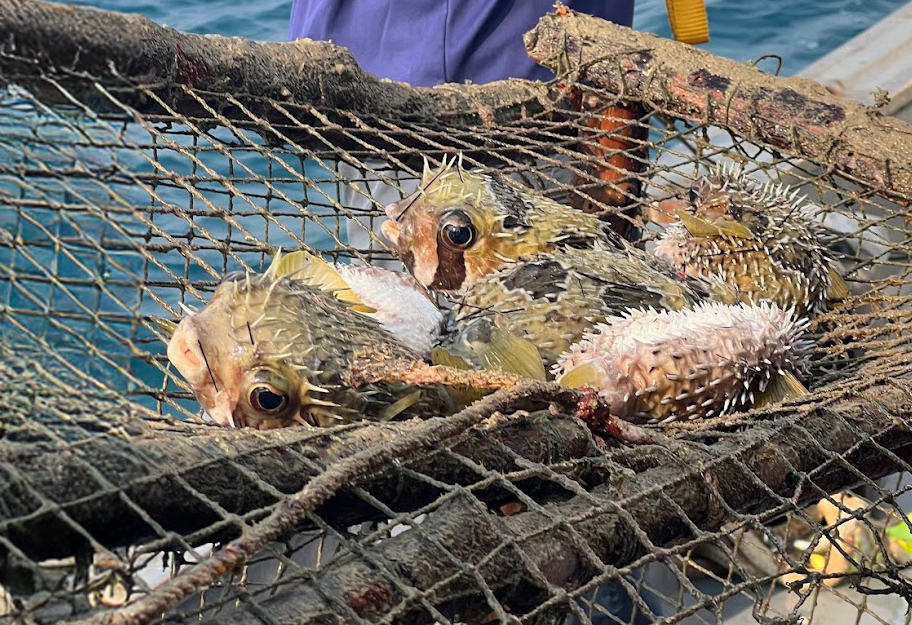
All Thais on board received training in using underwater drones and learned how to remove traps using the drone's claw. During the expedition, they found large amounts of lost squid traps as well as some large sea traps used for fishing. Both pufferfish, sea urchins, and squid got a new chance.

• Globally, it is estimated that ghost gear accounts for at least 10% of marine litter. This means that somewhere between 500,000 and 1 million tonnes of fishing gear are left in the ocean each year.
• Nets, lines, and ropes from fishing and shipping constitute at least 46% of the 45,000-129,000 tonnes of plastic waste floating in the North Pacific Gyre.
• Marine plastic waste affects 66% of marine mammals, 50% of seabirds, and all species of sea turtles.
Can the methods be used globally?
There was no doubt that the methods used in Norway can also be applied in other parts of the world, including tropical areas like Thailand. In Thailand, the focus would likely be more on specific areas, such as coral reefs, where nets and equipment often get entangled.
Combating ghost fishing requires international collaboration, and Norway and the Norwegian Retailers' Environment Fund are key players in the effort to find solutions. With modern technology, research-based methods, and cross-border cooperation, we can reduce ghost fishing and protect the marine ecosystem for the future.