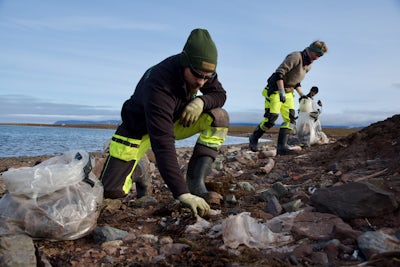
The fight against plastic litter in Malawi and Zimbabwe
Through capacity building and cooperation, the Basel Convention Secretariat has proven that the global plastic crisis can be managed at the national level.
Published: 15.January, 2025 Last updated: 05.December, 2025
Zimbabwe produces over 340,000 tonnes of plastic waste annually, while Malawi is plagued by floods caused by mismanaged plastic waste blocking drains. A common method of handling plastic waste here is burning it on the ground outside residences, making it crucial to find solutions to improve waste management, particularly of plastics. The Norwegian Retailers' Environment Fund has supported a project led by the Secretariat of the Basel Convention (BRS Secretariat) aimed at increasing the knowledge and capacity of national authorities to address this challenge.

Who is the Secretariat of the Basel Convention?
The Secretariat of the Basel Convention is a leading and recognized partner in the global governance of environmental agreements. They work towards the safe management of hazardous chemicals and waste to protect human health and the environment, globally, regionally, and nationally.
The project started in 2021 and has three main purposes.
Kontrollere transporten av plastavfall over landegrenser
Sikre forsvarlig håndtering av plastavfall
Redusere plastforsøpling til naturen
Progress and Results
Since the project's inception, plastic waste analysis has been developed in both Malawi and Zimbabwe. These analyses provide a detailed overview of estimated quantities of plastic waste, from production to plastic litter. By analyzing this data, authorities can identify critical weaknesses in current plastic waste management.

Proper waste management of plastics is crucial for a global circular plastics economy, which is why the Norwegian Retailers' Environment Fund is pleased to contribute to capacity building and new solutions through this project.
Cecilie Lind, CEO of the Norwegian Retailers' Environment Fund
Pilot Projects
Several pilot projects have been initiated to effectively reduce plastic pollution.

Forlatte fiskegarn
Fiskere ved Karibasjøen har fått opplæring i å samle inn ALDFG (forlatte, tapte og kasserte fiskeredskaper). Dette initiativet har allerede fjernet over 2 tonn garn og skapt arbeidsplasser for kvinner i Gache Gache-samfunnet.

Vanndispensere
I Harare erstatter vanndispensere engangs vannposer med rent drikkevann på en bærekraftig måte.

Plastreduksjon på hoteller
Flere hoteller jobber for å fjerne engangsplast i hotelrommene dems. Victoria Falls Hotel er blant de som har tatt i bruk gjenfyllbare glassflasker, digitale menyer og gjenbrukbare skittentøyposer.
More Than Just the Local Community
Not only has the BRS secretariat received support for similar work in other countries, but the project has also had other positive ripple effects. By empowering local communities, the project has inspired neighboring countries to learn from their experiences. Andrea Carraro, program manager at the Basel Convention Secretariat, hopes the project can be replicated elsewhere.
– We hope this project demonstrates how plastic waste can be managed in an environmentally friendly way, not only in Malawi and Zimbabwe, but also throughout the rest of the region.